
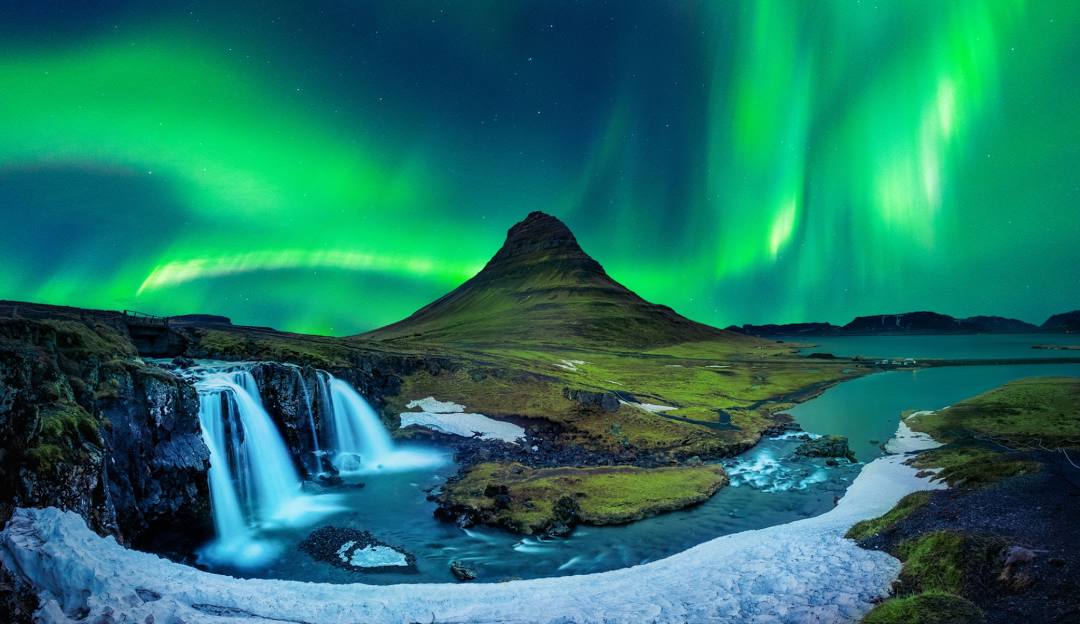
Iceland
What to know before traveling
Plan your own trip
Chargement de la carte...

Iceland
English Name : Iceland
Local Name : Lyoveldio Island
Capital
ReykjavikPopulation
308,910 peopleArea
103,000 km²Languages spoken
is,en,de,da,sv,noCurrency
ISK - KronaInternet domain
.isFrequently Asked Questions
No fluff, just short and clear answers
Why visit?
Iceland captivates visitors with its spectacular landscapes — volcanoes, waterfalls, glaciers, and natural hot springs — as well as the unique light of its endless summer days and the magic of the northern lights in winter.

When to go?
June to August are the best months for mild temperatures (between 9°C and 14°C) and long daylight hours. The weather is more unpredictable in May and September, but there are fewer tourists and prices are lower. In May, some roads may still be closed due to snow, but most main sites are accessible. For the northern lights: mid-October to March.

How long to stay?
Iceland is a small country, with most major attractions located in the south and west. 3 days are enough to visit the capital and the Golden Circle. 7 days to explore the southern waterfalls and glaciers. 10 days to drive the full Ring Road (Route 1). 14 days to enjoy the main highlights in depth. 21 days to venture into remote areas.

On-site budget
Iceland is an expensive destination. For two people, excluding flights, with 2–3* hotels, a rental car, fast-food meals, and a few activities: expect around €140 per person per day. Camping or traveling by van can reduce costs to about €100 per day. Activities such as whale watching, volcano tours, or geothermal baths can cost €80–150 each.
Safety / Health
Iceland is one of the safest countries in the world, with an extremely low crime rate. You can walk around safely with your camera. Car theft insurance is unnecessary. Outside Reykjavik, hospitals are scarce but the healthcare system is excellent. EU citizens are covered upon presenting their European Health Insurance Card. Always check safetravel.is before any trip to review current conditions.
Administrative procedures
To enter Iceland, most travelers must present a valid passport. Citizens of Schengen Area countries can enter with either a passport or a national ID card for stays of up to 90 days. Travelers from many other countries — including the United States, Canada, the United Kingdom, Australia, and Japan — do not require a visa for short tourist visits of up to 90 days within a 180-day period. Visitors from countries that require a Schengen visa must apply in advance through the embassy or consulate of a Schengen member state before departure. Upon arrival, customs and health regulations may restrict the import of fresh food, plants, or animal products. Alcohol and tobacco quantities are limited and must be declared if they exceed the duty-free allowances. Before traveling, always check the latest entry and visa requirements on the official Icelandic government website or your country’s foreign affairs portal, as rules can change.

Accommodation
There is currently a shortage of accommodation during the high season (July–August). There are few luxury options outside the capital. Most hotels are 2 or 3 stars and fill up quickly. Farm stays, which are usually very clean, offer a good alternative. Campsites are well maintained and plentiful. Wild camping is prohibited outside designated areas.

Communication
Icelanders speak excellent English, and most signs are translated. Many museums offer audio guides in French. If you speak some English, you’ll have no trouble communicating. 4G coverage (and now 5G around Reykjavik) is excellent, even in rural areas. Wi-Fi is free in most accommodations and gas stations.

Plane ticket
Iceland is well connected by international airlines. The main gateway, Keflavik International Airport (KEF), is located about 45 minutes from Reykjavik. Direct flights operate from most major European cities, North America, and, increasingly, Asia. Typical flight times: Northern and Western Europe: 2–4 hours. North America (East Coast): 5–6 hours. North America (West Coast): 7–9 hours. Asia and Oceania: usually 12–20 hours with a stopover. Airfare varies by season — June to August is peak season and the most expensive period. Booking several months in advance or flying in spring or autumn can significantly reduce costs. Some airlines, such as Icelandair, also offer free stopovers of a few days in Iceland, letting travelers explore the country before continuing to another destination.

Getting around
You can travel the Ring Road (Route 1) with a regular car, though some sections are unpaved. A sturdy sedan is recommended for the full loop. To explore the interior (F-roads), a 4x4 vehicle is mandatory. The mountain roads (Highlands) are open only from mid-June to mid-September. Campervans are a good option for Route 1. The bus network is reliable, though some routes run only in high season. Hitchhiking is common but not always fast.
Trip organization
A weekend is enough to plan your trip: flight tickets, car rental, accommodation, and activities. Travel agencies are not essential but can make booking accommodations easier. Book well in advance, especially for hotels and rental cars.

Money
You can withdraw Icelandic krona at the airport or in major towns, and exchange euros in banks or currency exchange offices. International credit cards are accepted everywhere, even in remote areas.
Another question?
Itinego is certified by the Iceland Tourism Board
